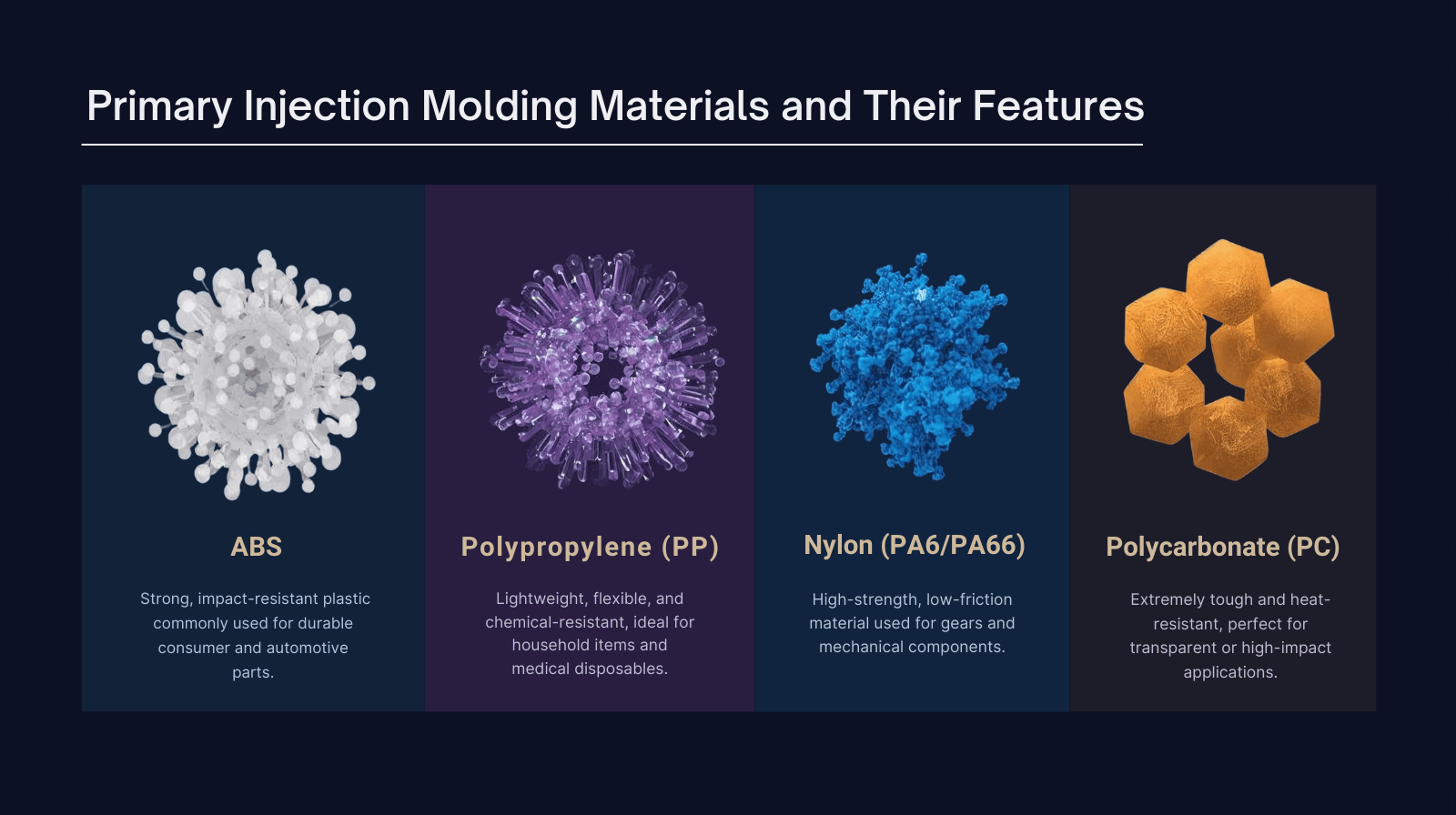
Material Selection Guide for Plastic Injection Molding (2025 Edition)

Choosing the right material is one of the most important steps in the plastic injection molding process. The performance, durability, cost, and efficiency of a product all depend on selecting the correct polymer.
If you’re searching for reliable plastic injection molding or custom mould manufacturing, you can explore industry-grade services at:
➡️ Supertech Industries – Plastic Parts Manufacturing Kerala
This guide is perfect for businesses working with automotive plastic parts, medical device moulding, consumer goods manufacturing, or companies planning prototype development.
1. Why Material Selection Matters
A well-chosen polymer ensures:
- High strength and durability
- Heat and chemical resistance
- Better surface finishing
- Lower rejection rates
- Longer mold life
To understand how material choice affects mold performance, see this resource:
➡️ Injection Molding Material Insights
Different industries demand different properties. For example, medical device moulding requires biocompatible plastics, while automotive parts need heat-resistant polymers.
2. Common Materials Used in Injection Molding
ABS (Acrylonitrile Butadiene Styrene)
✔ Strong, rigid, and impact-resistant
✔ Smooth finishing
✔ Easy to mold
Best for: Consumer goods, electronic housings, automotive interiors.
Learn more about ABS materials here:
https://supertechindustries.in/
Polypropylene (PP)
✔ Lightweight and flexible
✔ Chemical-resistant
✔ Suitable for living hinges
Best for: Household products, automotive components, medical disposables.
Polycarbonate (PC)
✔ High transparency
✔ High toughness
✔ Heat-resistant
Recommended for medical device moulding and transparent covers.
Nylon (PA6 / PA66)
✔ High wear resistance
✔ Low friction coefficient
✔ Great mechanical strength
Commonly used for gears and automotive plastic parts.
TPE / TPU (Thermoplastic Elastomers)
✔ Rubber-like flexibility
✔ Ideal for overmolding
✔ Great for grips and seals
Frequently used in consumer goods manufacturing.
3. How to Select the Right Material
1. Understand Functionality
Balance strength, flexibility, temperature, and impact requirements.
If you need technical guidance, check:
➡️ Mould Design Services Kerala
2. Evaluate Production Volume
- High volume → engineering-grade polymers
- Low volume → cost-effective materials
Businesses using plastic prototype development can test materials before scaling up.
3. Match Material to Industry Standards
- Automotive: heat & impact regulations
- Medical: sterilization compatibility
- Electronics: flame-retardant grades
Professional injection molding services in India can assist with compliance.
4. Consider Mold Design Requirements
Plastic flow, shrinkage, and cooling behavior depend on the polymer.
If you’re planning custom mould manufacturing, refer to: https://supertechindustries.in/
4. Material Trends for 2025
Kerala’s molding companies, especially those offering plastic parts manufacturing in Idukki, are adopting:
✔ Bio-based plastics
✔ Recycled engineering materials
✔ Multi-material molding
✔ Lightweight automotive-grade compounds
These materials help reduce waste and improve mold life.
5. Why Material Selection Matters for Local Manufacturing (Kerala & Idukki)
Local manufacturers benefit from:
- Lower rejection rates
- Faster lead times
- Precise mold development
- Industry-standard compliance
If you’re working with an injection molding company in Kerala, selecting the correct material ensures consistent quality across batches.
Learn more:
➡️ https://supertechindustries.in/
Conclusion
Material selection is the foundation of every successful injection molding project. Whether you need durable automotive parts, precise medical components, or high-volume consumer goods, choosing the right polymer is essential.
If you’re looking for plastic injection molding, mould design services, or custom mould manufacturing, explore:
👉 Supertech Industries – Injection Molding Kerala