Common Defects in Plastic Injection Moulding and How to Avoid Them

Plastic injection moulding is one of the most widely used manufacturing processes for producing high-precision plastic components at scale. However, even with advanced machinery and tooling, defects can occur if process parameters are not optimized.
Understanding these defects—and how to prevent them—is critical for ensuring consistent quality, reduced rejection rates, and cost efficiency.
1. Warpage
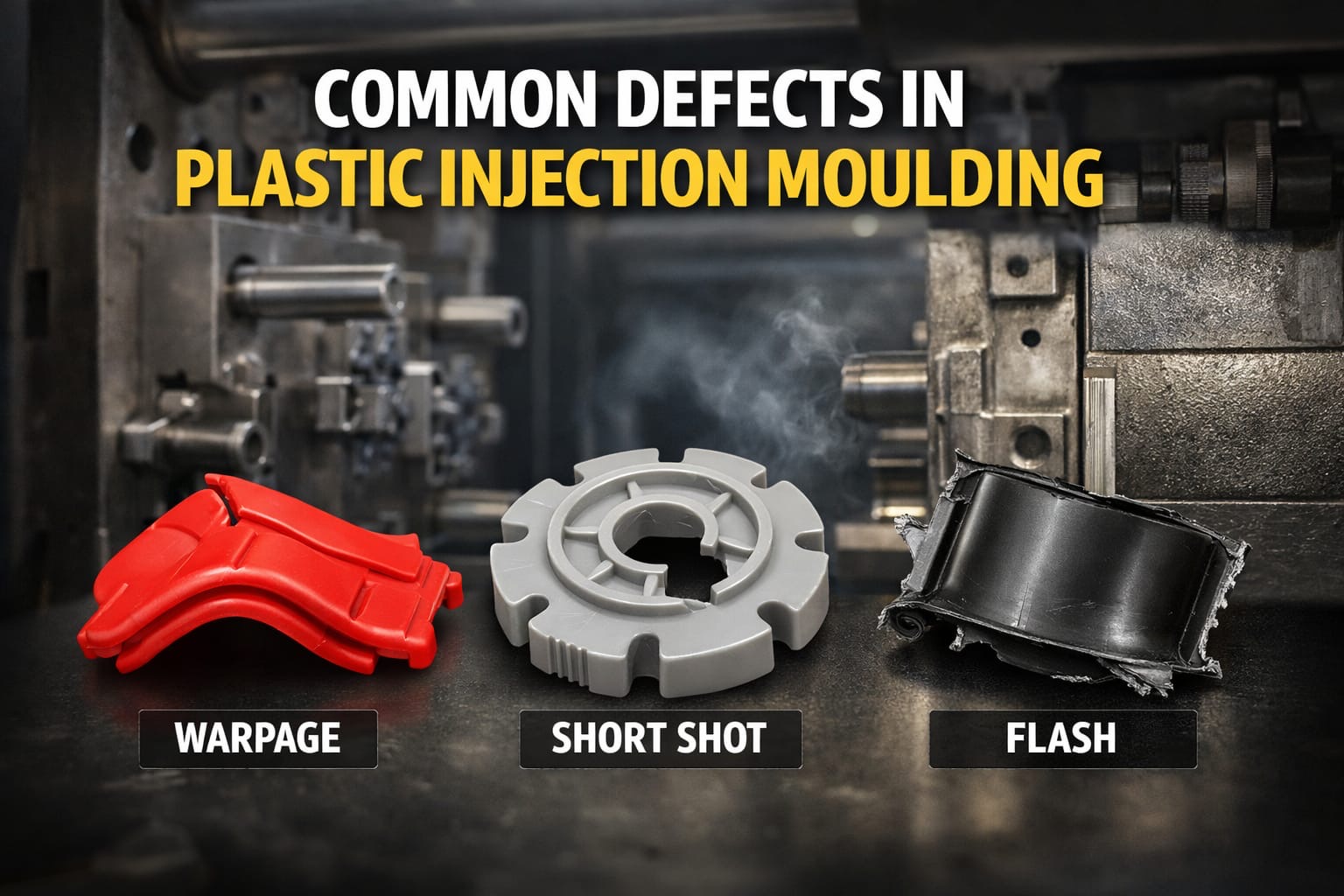
Warpage occurs when different areas of a part cool and shrink unevenly, leading to bending or distortion.
How to prevent:
- Maintain consistent mould temperature across cavities
- Design with uniform wall thickness
- Optimize cooling channel layout
- Use materials with low shrinkage characteristics
2. Sink Marks
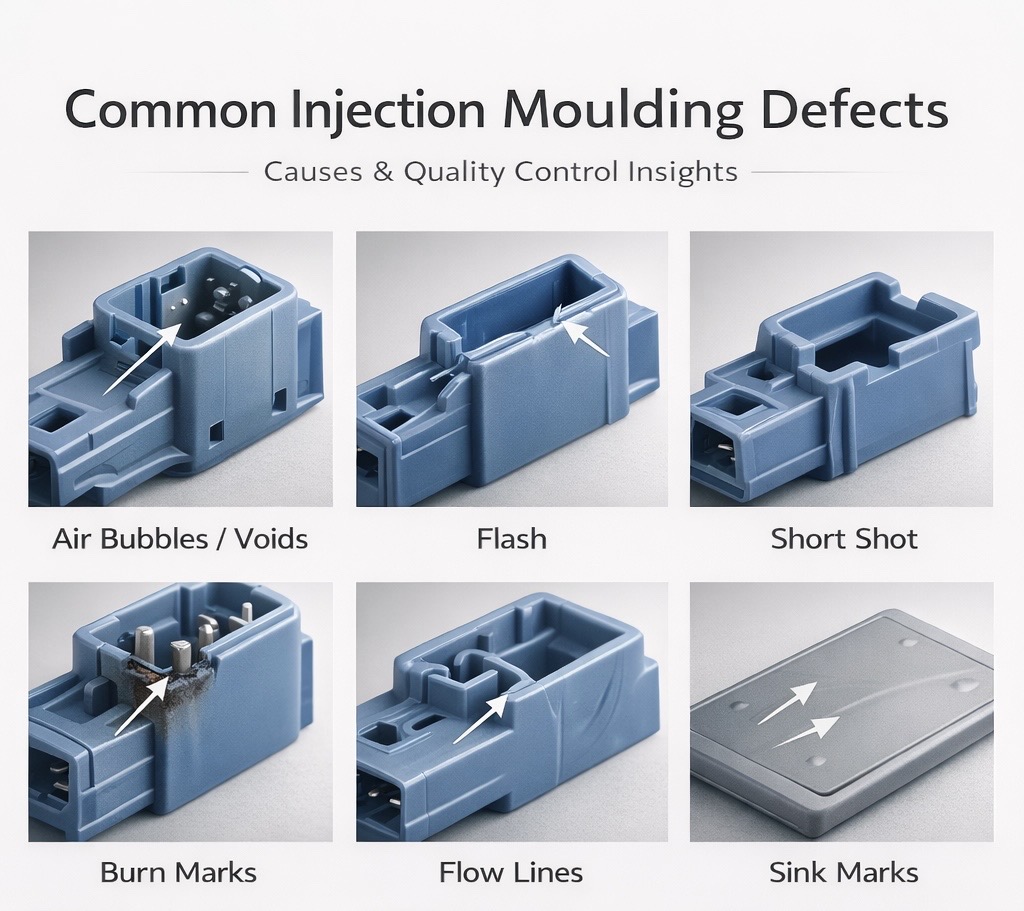
Sink marks appear as small depressions on the surface, typically in thicker sections of the part.
How to prevent:
- Increase packing pressure and holding time
- Reduce wall thickness in critical areas
- Improve cooling efficiency
- Optimize gate location and design
3. Bubbles and Voids
These are internal air pockets caused by trapped gases or improper material flow.
How to prevent:
- Improve mould venting systems
- Reduce injection speed to prevent air entrapment
- Ensure proper material drying before processing
- Use vacuum-assisted moulding if necessary
4. Flash
Flash is excess material that leaks out of the mould cavity, usually along parting lines.
How to prevent:
- Increase clamping force
- Reduce injection pressure if excessive
- Ensure mould surfaces are properly aligned and maintained
- Check for wear and damage in mould components
5. Short Shot
A short shot happens when the mould cavity is not completely filled, resulting in incomplete parts.
How to prevent:
- Increase injection pressure and speed
- Ensure adequate material temperature
- Improve venting to allow air escape
- Check runner and gate design for flow restrictions
6. Cracking and Crazing
These defects appear as fine cracks or fractures due to internal stress or environmental exposure.
How to prevent:
- Select materials suited for the application environment
- Avoid sharp corners in design (use fillets)
- Optimize cooling to reduce residual stress
- Control humidity and chemical exposure
Final Thoughts
Achieving defect-free plastic components is not just about machinery—it’s about precision in design, material selection, and process control.
Manufacturers who proactively address these issues can significantly improve:
- Product durability
- Production efficiency
- Overall cost-effectiveness